
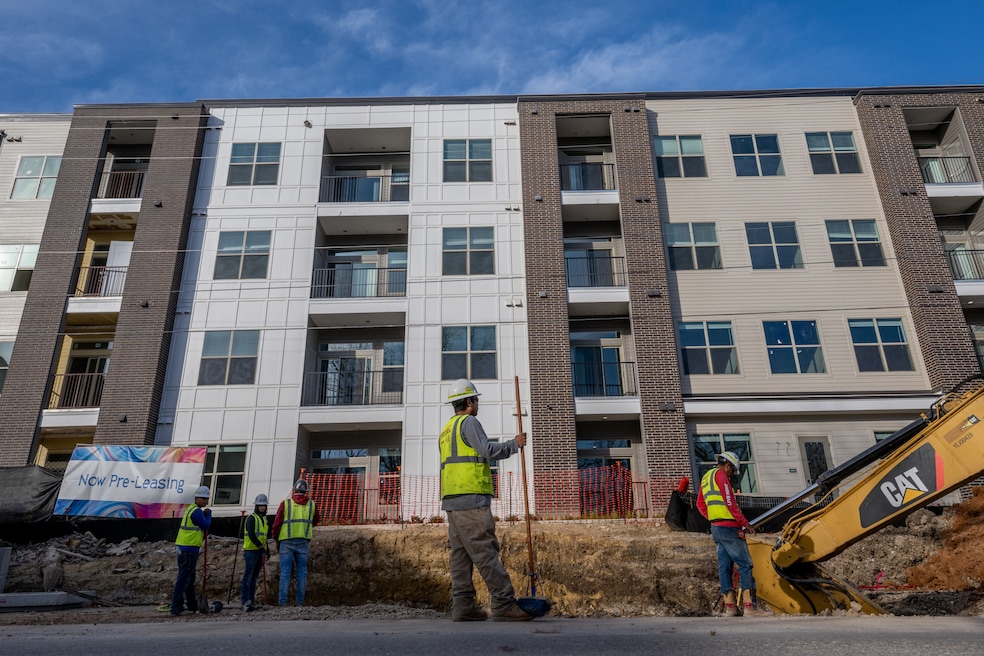
A policymaker wants to modify an immigration-related piece of legislation that caters to the wealthy, one with ripple effects on the housing supply.
Senator Ruben Gallego wants to change the EB-5 Immigrant Investor Program. The program offers a green card to foreigners who invest in real estate projects that create at least 10 jobs.
The program, launched by Congress in 1990, has a minimum threshold of approximately $1.05 million for non-Targeted Employment Areas, which can be applied toward any commercial or residential development. Gallego wants to create another non-Targeted Employment Areas program with a minimum threshold of $800,000 for projects exclusively catering to housing or mixed-use developments primarily filled with housing. Currently, one exists at the $800,000 mark for targeted roles and fields for any type of project, which limits the jobs developers can hire for. Investors who opt for affordable housing development would get the bonus of an expedited green card application, skipping the line of others in the $800,000 program who invested in other types of housing developments.
“This could be exceptionally large, because there would be a lot of people who would want to do this,” said Ken Johnson, endowed chair of real estate and professor of finance at the University of Mississippi. “It’s a ticket to the American Dream, and it helps enhance the housing supply. This is kind of a no-brainer.”
The Senate got the draft of the “Building Housing for the American Dream Act” on Wednesday. Gallego told Homes.com that the revisions to the EB-5 program would be considered by a committee within the Senate, either as a standalone piece of legislation or incorporated into a larger bill. If it passes, it will be sent to the House of Representatives.
To be sure, the proposal is being floated at a time when the awarding of visas, annual caps on them, and per-country limits are the subject of contentious debate.
Developers turn to program for finance boost during construction
The funding goes far in cities like Miami, hotbeds for both foreign investment and residential projects. Despite the existing sky-high supply of new listings in the Magic City, new developments continue to progress.
Some development teams turn to the EB-5 program for a financial boost during the construction process. It’s a win-win for the local economy, said Michael Sadov, sales director of Okan Tower Miami at 555 N. Miami Ave. Prices there start at $750,000 for a 450-square-foot studio, ironically just slightly below the minimum threshold for investment in Gallego's proposal. Developers tapping into the EB-5 program get money to build and are required to hire 10 laborers for every $1.05 million investment.
"Why go to a bank and get debt at double digits, whereas you can get free money," Sadov said. "If a developer is building a project that's half a billion dollars, and they're able to raise EB-5 money, they save a tremendous amount of money in terms of interest. You’re borrowing money at almost no cost."
The Okan Tower team has about a dozen EB-5 investors, primarily from China, Sadov said. They continue to recruit in Argentina, Brazil, and Mexico, striving to reach up to 30.
Once completed, it’s expected to be one of the tallest residential buildings in the state of Florida — a total of 70 floors and about 984 feet in height.
"I’m looking at all different efforts to bring as much housing online to reduce the cost of housing," Gallego said. "EB-5 offers the opportunity to have an injection of cash without having anything to do on the tax side and regulation side."