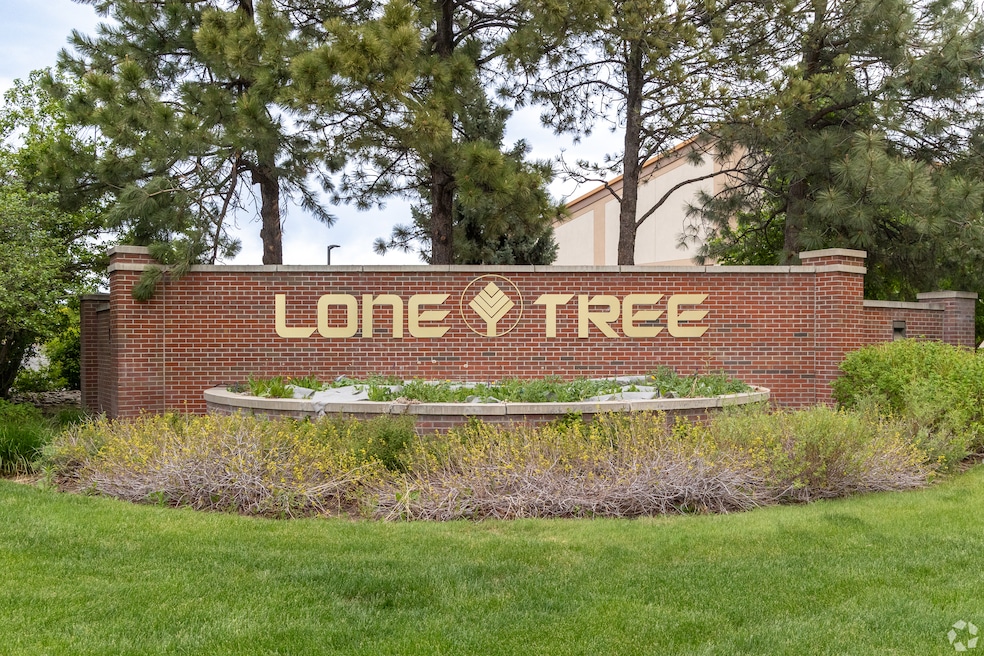
A proposed housing development in Lone Tree, Colorado, is getting pushback from residents due to its location along undeveloped grasslands that overlook Bluffs Regional Park.
It's a tug-of-war playing out across the United States, as the demand for more housing clashes with the desire to retain a community's character and natural attractions.
Tara Meekma, a Lone Tree resident and real estate agent, said developer RidgeGate Investments and local builder Brookfield Residential are proposing to put a 343-home subdivision, known as Hillcamp, on the mesa tops in Douglas County, adjacent to the East-West Regional Trail.
“Along with that, they want to do a private amenity center for their residents,” Meekma said. “Their whole development plan includes open space and trails."
Peter Lauener, president of Brookfield Residential’s Colorado Division, told Homes.com that Hillcamp will complete the west side of RidgeGate’s overall long-range mixed-use development in Lone Tree known as RidgeGate. According to the city website, the 3,500-acre development is situated south of Lincoln Avenue and east and west of Interstate 25.
Hillcamp will include 392 acres of terrain, 170 acres of new open space and more than 7.5 miles of public trails, Lauener said. “The design emphasizes preserving the existing topography, wildlife corridors and views, while enhancing public access to outdoor spaces.”
It will be a “neighborhood of high-quality single-family homes,” he said, noting that the pricing hasn't been finalized.
Petition garners 8,000-plus signatures
Meekma and fellow Lone Tree resident Luzda Padilla discovered the project via social media by the city in August. They also saw a flyer for the project while walking along a trail in the proposed location.
Meekma and Padilla have circulated a petition that has reached 8,000 signatures and created a website called Save the Lone Tree Bluffs in an effort to halt the development. Census data from 2020 show that there are slightly more than 14,000 people residing in Lone Tree.
“The pushback is mostly that the bluffs are beautiful,” Padilla said. “The bluffs are amazing. People love this place, and we love this place because you can walk for hours and you feel lost in nature, not in the middle of the city.”

Meekma said the area of the proposed development attracts visitors and compels many people to move to Lone Tree.
“There's also just the overall impact to nature,” Meekma said. “It's been cattle land and grazing land for hundreds of years ... It's going to have big repercussions to not only people's enjoyment of nature, but also just truly our wildlife.”
Beyond the impact on nature, residents have raised concerns about traffic and road safety, drainage and runoff, the effects of road and infrastructure construction on fragile hillsides with a history of movement, and fire-risk management for the exposed mesa and surrounding areas.
Lauener said the plan incorporates wildfire-conscious design standards and safety measures, such as new fire hydrants, underground utility poles and improved emergency access for roads. It also includes allowances for access roads and infrastructure within 447 acres of designated open space, transferred to the city in 2020.
Hillcamp’s main access will extend Cabela Drive to RidgeGate Parkway, with two additional emergency routes aligned with city standards, Lauener said. All roads will follow approved rights-of-way and consider sensitive environmental and geological conditions. He added that the city and development team will collaborate on these designs, and maintenance of public roads and a proposed pedestrian bridge will be assumed by the city of Lone Tree or Douglas County.
‘We want to be heard’
“There are 8,000 people that have said, ‘We want to be heard,” Meekma said of the petition. “We don't think this development should go through. In the end, does a petition on Change.org hold any political sway? No.”
However, she and Padilla said it demonstrates how people feel about this project.
Lauener said community feedback from residents is valuable to the process.
“Hosting community meetings helps us have conversations directly with residents and keep everyone informed,” Lauener said.
When asked why RidgeGate and Brookfield were attracted to Lone Tree, Lauener said the land has been a part of RidgeGate’s vision for several years.
“Both parcels that make up the Hillcamp site were annexed and zoned and incorporated into Lone Tree in 2000 and 2004, respectively, with zoning in place for single-family homes at that time,” he said. “RidgeGate’s master plan was designed to grow in phases, allowing for backbone infrastructure, transit and community amenities to be built alongside housing.”
What’s next?
When asked for comment on the development, Melissa Gallegos, Lone Tree's communications director, said the city had no comment “because the project is an active land use application, under quasi-judicial review.”
Gallegos said a public hearing is planned for the spring.
Lauener added that community members will continue to have the opportunity to share their feedback and concerns, “with the goal of building a neighborhood that reflects shared priorities and strengthens the character of Lone Tree.”
Meekma and Padilla said they will continue to engage with the developers, residents and the city. “This is a fire that won't be put down,” Padilla said.
“We would love to sit down at the table and be like, ‘What are ways where the community feels like they're heard, their concerns are listened to,” Meekma said. “At the end of the day … they seem very entrenched.”
Padilla and Meekma said they are not opposed to development in general. They said they live in newer developments and are not naïve about growth.
They simply believe that development should be approached responsibly and with consideration for community needs.
“There are just some places that need to be off-limits, like Washington Park [in Denver], Central Park in New York City, the Bluffs in Lone Tree,” Meekma said.