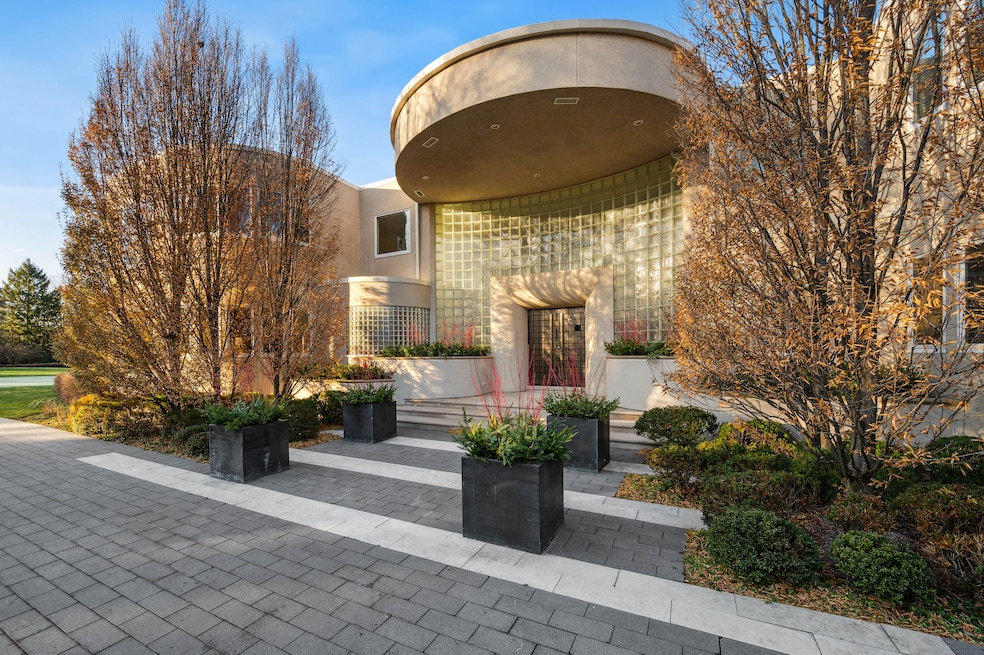
After a buyer paid $9.5 million for Michael Jordan’s Highland Park, Illinois, estate last December, his shots to turn the property into a profitable venture have fallen short. Now, the owner is pivoting to a new plan: transforming the house into a museum.
John Cooper, a partner at the suburban Chicago investment firm Han Capital, announced a timeshare-style opportunity for willing Jordan mega fans in January, shortly after closing on the 37,706 square-foot mansion.
That access would cost $1 million and included one week in the home at 2700 Point Lane that Cooper now calls “Champions Point.” The proposal resulted in Highland Park officials amending its zoning codes, ultimately deciding to prohibit timeshares in residential zones when it was previously undefined.
Cooper also opened the property to short-term rentals — with permission to use the home’s regulation-sized basketball court, cigar room, putting green and infinity pool — on Airbnb for about $13,120 a night, or long-term rentals for $89,000 a month.
On Monday, Cooper made a new pitch to Highland Park’s City Council: Open the NBA icon’s sprawling 1995-built property to tourists.
The meeting was Cooper’s first step in attaining a zoning amendment to turn the property into for-profit use. In a 4-3 vote, the council permitted Cooper to proceed with seeking approval for the museum.
Investor eyes 100,000 annual visitors
The owner’s pitch deck outlines plans for the property to become “a living platform dedicated to guiding every patron to realize their untapped potential and actively experience greatness within,” by offering tours and specialized “community days.”
Cooper, a Lincolnshire, Illinois, resident, anticipates about 300 patrons daily, he said during the meeting, totaling about 100,000 visitors annually.
“That property was for sale for nearly 13 years and lots of people had the opportunity to purchase the property as a house, and it just wasn’t selling as a house,” said Cooper during the meeting. “It’s not a practical house unless you’re a billionaire — to live there is unrealistic.”

On the property, Cooper’s mission would be achieved through “narrative art and rhythmic soundscapes” sharing empowering stories, virtual reality experiences and “living classroom” community days where visitors can use Jordan’s former court as a setting for “high-pressure simulation drills and consistency labs.”
Outside the home, Cooper described guest speaking opportunities and mentorship, plus a partnership with the nearby Park District-owned Heller Nature Center, which could be the starting point for visitors to either walk or bus to Champions Point.
The estate abuts the 97-acre preserve, and Cooper suggested extending its walking trail to access Champions Point. He confirmed having previously met multiple times with the park district. Cooper also promised a 5% share of ticket revenue to the park district, predicting upward of $500,000 or more for the district per year. That expectation would pencil out to an overall annual ticket revenue of $10 million.
Cooper did not respond to an email request for comment.
City, neighbors voice concerns of potential impact
While council members expressed concern over the impact on neighbors and Cooper's ability to run a museum, the majority voted in favor of the proposal on Monday, moving it forward through the traditional approval process.
“I have equally big concerns, again, that there’s no actual concept for a museum and, as I said, the impact on the Heller Nature Center and the neighbors,” said Councilmember Yumi Ross during the meeting.
Cooper additionally proposed moving the notable “23” gate — Jordan’s jersey number and an original choice by the basketball star — to inside the property to limit visitors from stopping by. He also offered to pay for additional security and to gate the neighborhood to alleviate safety concerns.
Public comments included residents accusing Cooper of "pressuring neighbors" to allow him to pursue the museum and promising them a share of the profits. Other neighbors and councilmembers cited complaints of large events on-site since Cooper's purchase. Other public commenters supported Cooper's museum.
"I had the opportunity to bring some youth out to the property, and it was an experience for them that was just life-changing. ... This project aligns with the mission by sharing a path to greatness," said Claudia Martin, founder of nonprofit ChiCook Officers in Motion, who brought a group of middle and high schoolers to the property this summer.
While Cooper looks to monetize on Jordan’s career and prior ownership of the home, he never mentions his name in the proposal or Champions Point marketing.
Cooper’s purchase of the property made headlines for ending its 12-year run on the market. Jordan first listed the home in 2012 for $29 million. It underwent a series of price cuts, with its last asking price being $14.85 million before Cooper purchased it for a 36% discount.