
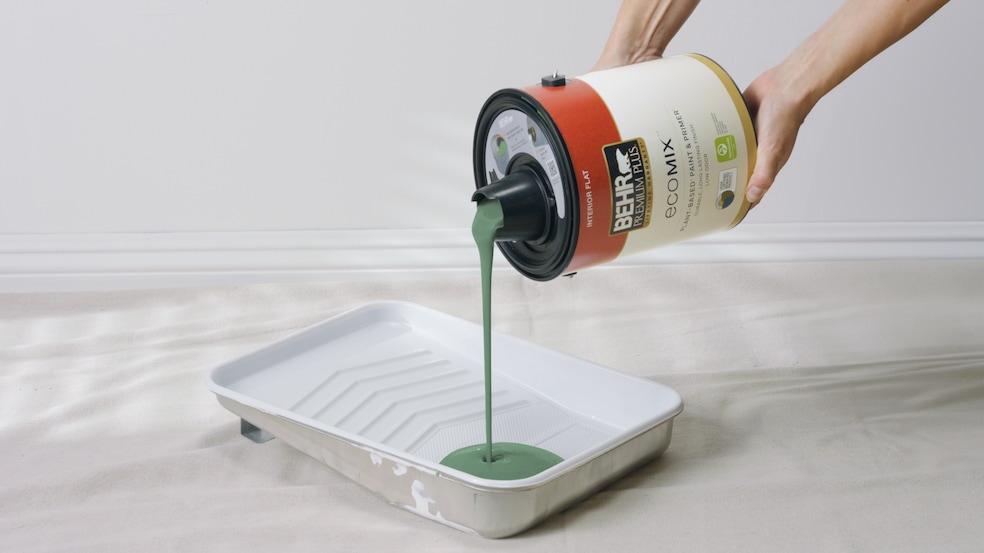
It started with plant-based diets, rich in nutty grains, dense legumes and crunchy seeds. Then came plant-based cleaners and personal care products. Now, we have cans of plant-based house paints.
Interest in “plant-based” has grown in recent years, according to Google Trends searches, shooting up in 2021 and hitting new heights in August. Admittedly, most of those queries involved plant-based proteins, diets and other foods, but once a phrase enters the zeitgeist, it tends to draw eyes.
It also reflects a blooming interest in finding substitutes for petrochemical compounds that often serve as the base for plastics and more, Dean Webster, professor and chair of North Dakota State University's Department of Coatings and Polymeric Materials, explained in an email. Derived from fossil fuels, these far-reaching chemicals have been linked to noxious health effects such as “cancers, cardiovascular disease and infertility,” according to research published in the New England Journal of Medicine.
And, although petrochemical products remain pervasive, the industry faces uncertainty, according to analytics firm Wood Mackenzie. Confronted with “underwhelming demand growth” and a pandemic-era oversupply, the “petrochemical industry stands at a critical juncture as it experiences one of its most challenging periods in recent history,” stated a September 2025 report.
“Over the past few decades, there has been growing interest in replacing the compounds used in petrochemical polymers with those based on plants either in part or fully,” Webster said. “Chemicals derived from plants are often called ‘biobased,’” he continued, pointing to the 2009-era “PlantBottle” from beverage company Coca-Cola as a cultural touchstone. The beverage company says the bottles are made partially from plants and 100% recyclable.
Bio- and plant-based alternatives don’t necessarily mean performance compromises, Webster noted. Sometimes, they are duplicates that offer identical performance attributes, and other times, “the plant-based component might be different and offer performance benefits.”
Still, for the most part, the primary benefits of bio- or plant-based chemical alternatives are environmental, Webster noted: They might not necessarily be healthier because they’re plant based, but, unlike petrochemical compounds, they’re made from renewable resources and can reduce dependence on fossil fuels and lower CO2 emissions.
Bio-based paints lighten environmental load
Now, homeowners can buy plant-based paints, daubing their walls with an option that companies categorize as being gentler on the environment and on occupants. The Santa Ana, California-based paint maker Behr launched its first plant-based offering this month, billing it as its “Premium Plus Ecomix Plant-based Paint and Primer.”
According to Behr, the new paint, with zero volatile organic compounds, is a first-of-its-kind coating in the sense that it’s a fully acrylic paint made from an at-least 20% base of “renewable materials.”
That 20% is where the “plant-based” comes in.
Of course, Behr’s offering isn’t the only bio-based paint on the market. In 2023, limewash company James Alexander Specialty Paints launched Thrive, a zero-VOC interior paint line with a plant-binder.
Instead of many acrylics or vinyl acetate — common petrochemical-based binders for water-based paints — Thrive relies on substitutes made from corn and wheat byproducts, explained James Alexander co-founder Amanda Dunn over email. This helps prioritize indoor air quality while ensuring that walls can breathe and mitigate mildew.
Still, plant-based paints face consumer misconceptions, Dunn said. One common assumption she encounters is that these plant-based paints are less durable than synthetic options. While Thrive shouldn’t be scrubbed, and is not recommended for exterior applications or flooring, Dunn said, it performs and can be cleaned like an ultra-matte paint.
Since hitting the market, the line has “generally received a positive response, particularly from consumers who prioritize health, sustainability and nontoxic home products,” Dunn said. And, although fledgling, the world’s nontoxic paint market is expanding, according to research and coverings professionals.