
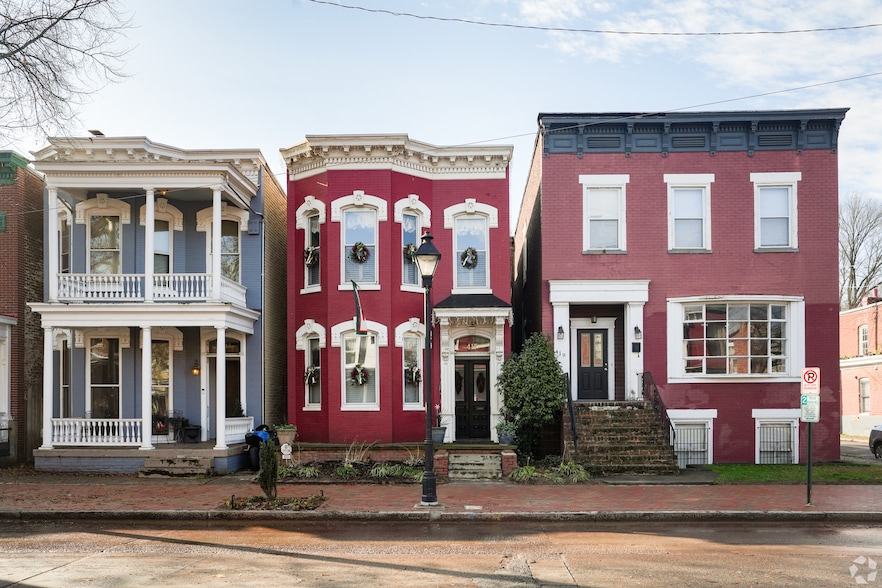
A plan to protect Richmond, Virginia’s cultural and historic assets includes proposals to impose substantial fees on property owners who demolish houses and other buildings in certain areas without the city government’s blessing.
At the same time, the city hopes to encourage owners to restore those same structures by offering financial incentives, including tax abatements for renovating owner-occupied houses.
These ideas are included in the draft Cultural Heritage Stewardship Plan, which the Planning Commission approved last month and forwarded to the City Council for a final vote. The plan comes amid concerns from some residents that a wave of new development in the city could lead to more teardowns of older homes that are historic or contribute to neighborhood character.
"It's not just about buildings and monuments, it's about the living culture of our neighborhoods, the stories of our diverse communities, and ensuring that preservation serves all Richmonders, not just a privileged few," Kimberly Chen, a senior manager for the city, who helped prepare the cultural plan, said in a statement.
Richmond has a long history of historical preservation, according to the plan, but also a legacy of tearing down parts of historical neighborhoods, notably the predominantly Black areas of Jackson Ward and Fulton, from the 1950s through the 1970s.
The plan suggests fees of up to twice the assessed value of a property for a building that is torn down or moved without the city’s approval. The fees would apply within designated Old and Historic districts, including areas such as Shockoe Slip, Church Hill and Jackson Ward. The city’s Commission of Architectural Review decides whether to approve or deny development proposals in these areas. Officials currently have little ability to penalize owners who tear down a structure despite having been denied permission.
City Councilor Katherine Jordan has filed a bill to implement higher fees on demolitions, although her legislation doesn’t specify how high these fees should be. The council’s land use committee recommended passage of her bill last month.
Proposal would also offer incentives to rehabilitate
The plan also calls for tax incentives to encourage owners to renovate older buildings in historic districts. Approaches to incentives should “not encourage displacement” of long-term residents or gentrification, according to the document.
In historic districts, as well as other parts of Richmond, the plan proposes a close look at how the city values property for tax purposes to enhance preservation. The city should overhaul its tax abatement program for people who rehabilitate owner-occupied properties “to make it more accessible to lower-income residents or lower-cost neighborhoods,” according to the plan.
Kevin Vonck, the city’s planning director, told the Planning Commission at its November meeting that one of the biggest concerns he heard from residents and developers was about how aspects of the cultural heritage plan, such as demolition fees, would affect housing affordability.
“Any time you add regulations, there’s a cost associated with that. We did our best to say there are opportunities to mitigate those costs,” Vonck said.