
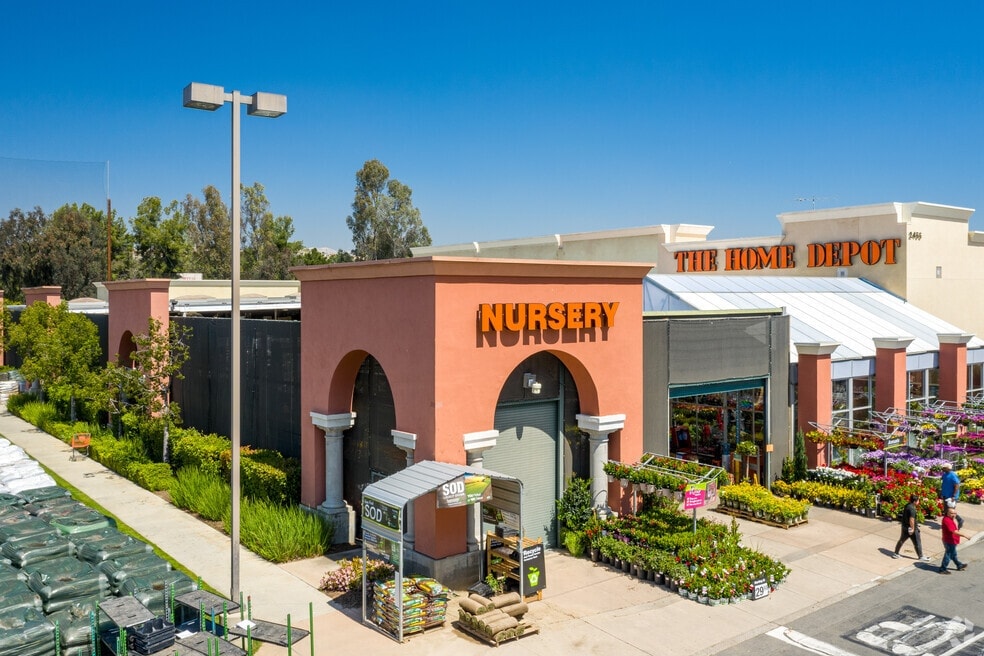
Home Depot hopes for 'pent-up demand' next year
Officials at Home Depot said the company expects sales to grow next year if homebuying activity increases nationwide in 2026.
The home improvement retailer released its 2026 financial guidance on Tuesday, and within it, company officials predicted same-store sales will either be flat or rise by 2% at the most. Total sales growth for the company's fiscal year is expected to be between 2.5% and 4.5%, officials predict. Sales within the broader home improvement store market nationwide will change somewhere between minus 1% and 1%, company officials said.
Those figures represent "our performance expectations once we see momentum in housing activity and increased spend on larger projects driven by pent-up demand," Richard McPhail, the retailer's chief financial officer, said in a statement Tuesday.
"We believe that the pressures in housing will correct and provide the home improvement market with support for growth faster than the general economy, and we expect to continue to grow faster than our market," McPhail said.
Home Depot is the nation's largest home improvement retailer, with 2,356 retail stores in all 50 states, the District of Columbia, Puerto Rico, the U.S. Virgin Islands and Guam. The company, which also operates locations in Canada and Mexico, had more than 470,000 store-based employees.
Market favors affluent buyers, Toll Brothers earnings show
While entry-level homebuyers face the stress of home prices and mortgage rates weighing on their affordability, move-up luxury buyers continue to drive sales for Toll Brothers.
The Pennsylvania-based company, which is the nation's 10th-largest builder by volume, posted an average sales price of $960,000 for the year, according to earnings figures released Tuesday. Toll Brothers' home sales revenue for the fourth quarter was $3.41 billion, compared to the $3.26 billion it saw in 2024’s fourth quarter.
Toll Brothers' buyer activity is a reflection of a new-home sales market split in two. Some large builders have attracted buyers with mortgage rate buydowns, but Toll Brothers noted that the company’s more affluent buyers care little about mortgage rates.
Rather, Toll Brothers buyers prefer spending incentive dollars on upgrades, and still, 26% of buyers paid in all cash. On average, Toll Brothers buyers spend an additional $206,000, or 24% of the home’s base price, on design selections.
Incentives from the builder amount to approximately 8% of the sales price, and company officials stated that they expect the same rate to continue in 2026.
"I think through these softer times, we continue to expect the active adult group to outperform, and we're seeing that," said CEO Doug Yearley.
The builder plans to increase its development count by upward of 10% next year. Yearley added that he’s remaining conservative for his next year outlook but could see buyers settling into the new housing landscape, which has been in a longer-than-usual "down cycle."
Study calls to modernize construction safety training
Construction firms must modernize their safety training programs and adopt new technologies to meet the challenges of regulatory compliance. That’s according to the key findings of a joint study the American Society of Safety Professionals and the J.J. Keller Center for Market Insights released Dec. 2.
In a survey of 700 industry professionals, 32% said job site safety was one of construction’s biggest challenges, behind only labor shortages (38%) and rising material costs (35%).
Part of the issue comes from training, with 48% of respondents saying they were only “somewhat” or “not at all” confident that current training programs prepare employees to perform safely and in compliance with regulations. More than half (54%) said workers were not wearing protective gear properly.
Firms have integrated new training methods and safety technology, including mobile apps, incident reporting software and even virtual reality systems, according to the report. However, 56% of respondents reported that they were only “somewhat” or “not at all” confident that the technology they are using supports compliance or reduces risk.