
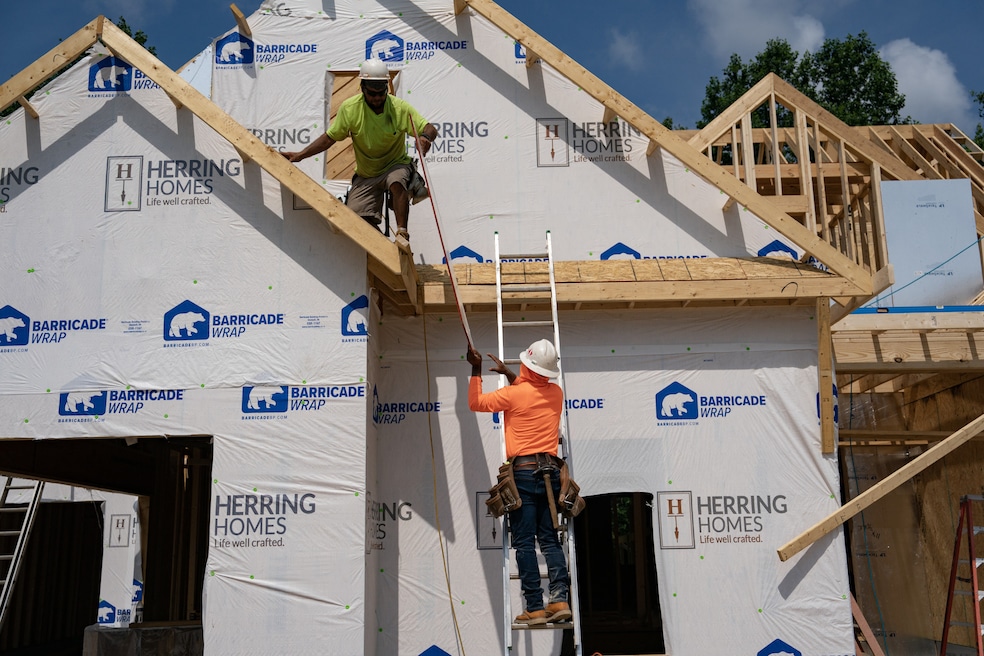
Residential construction costs on the ascent
Prices for residential building materials continued on an upward trend in July, with certain key goods increasing more than 25% over one year ago, according to a National Association of Home Builders analysis of government data.
Costs for new residential construction increased 0.2% in July, excluding capital investment, labor and imports. That followed a 0.8% increase in June, the NAHB said in an online post Thursday, citing data from the updated U.S. Bureau of Labor Statistics Producer Price Index.
While government tariffs do not show up directly in the data, because the index measures prices of domestically produced goods, price changes in reaction to tariffs do appear in these figures, the association said.
The largest one-year price hike in July was for construction machinery, which rose more than 31%. The price of metal molding and trim was up over 25%, fabricated steel plate prices increased 14%, and wire and cable rose 10%.
“Metal commodities have been the primary targets of tariffs, with 50% tariffs in effect on steel and aluminum products,” according to the analysis.
Prices for construction-related services, which the NAHB said account for around 40% of overall residential costs compared to 60% for tangible goods like machinery, rose at a faster pace than goods in July from one year earlier. Services include trade and transportation and warehousing, among others.
Jobless claims dip
The number of unemployment claims filed for the week that ended Aug. 9 was a seasonally adjusted 224,000, down 3,000 from the previous week, according to the U.S. Labor Department.
The agency also reported that the number of people receiving unemployment benefits for the week ending Aug. 2 was a seasonally adjusted 1.953 million, down 15,000 from one week prior.
While the week-to-week data is positive, the longer-term trend has not been great for the labor market. The U.S. Bureau of Labor Statistics said earlier this month that employers added 73,000 jobs in July, far less than the 110,000 many analysts had expected. The bureau also revised the number of jobs added in May and June downward by 258,000. The disappointing data led President Trump to fire BLS director Erika McEntarfer; he has since nominated E.J. Antoni to take her place.