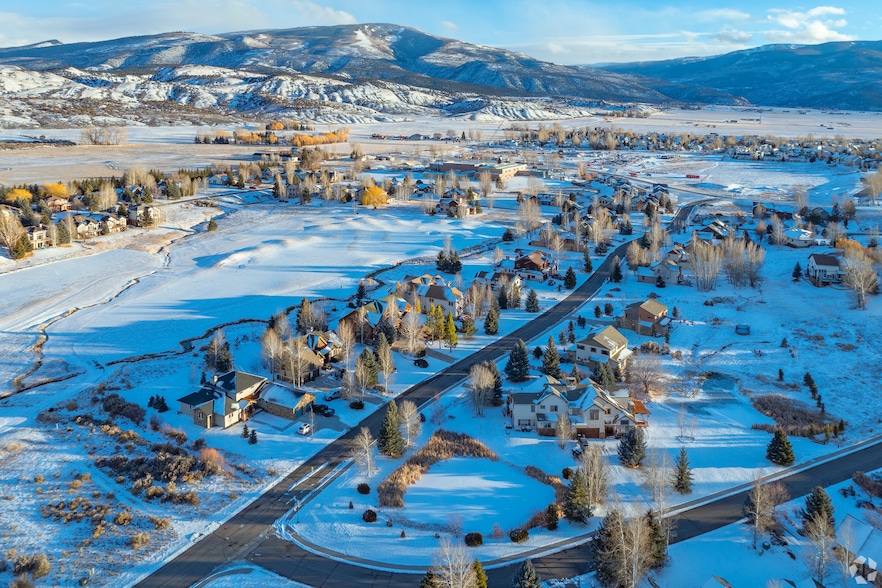
In the 1980s, Jimmy Buffett cast Leadville, Colorado, as a carefree stop along the Continental Divide — a place for cold beers and sweeping mountain views.
Today, that easygoing image remains to some extent, but collides with a new reality: population booms in the region and soaring housing costs that are reshaping life in mountain towns across Colorado.
Matthew Roberts, 57, grew up in Leadville, returned and settled in rural Colorado in 1989, and remained there until earlier this year — when he moved to Arizona.
“It's an interesting thing, because the mountain communities outside of the resorts were always the safe havens,” Roberts said. “There was always that affordability just over the hill … Obviously those things have changed dramatically.”
That was then. This is now.
During his childhood in the 1970s, Roberts said, towns like Vail and Aspen were already considered elite destinations, alongside places such as Steamboat Springs and Telluride. These areas attracted a distinct type of homeowner, while nearby communities like Leadville, Gypsum and Eagle served as the more affordable “bedroom towns" for those working in the resort regions, Roberts said.
“It's the term that I grew up knowing from living in the mountains,” Roberts said. “It was where you spent your evenings because we all commuted over the hill to Vail, over the hill to Summit County ... That's an interesting part of the day-to-day lifestyle of folks who are really, truly native to the high Rockies in Colorado.”

Fifteen years ago, earning $20 an hour was considered a good wage, he said, and many people were willing to travel 30- to 40 minutes in harsh weather to enjoy the lifestyle the Colorado mountains offered.
These days, home prices and demand have skyrocketed, shining a spotlight on a question being asked throughout the country — from the shores of Martha's Vineyard to the mountains of the West: Where can the people who work in these resort areas afford to live? The challenge became even more dire when COVID-19 hit and people could work from just about anywhere.
Which they did.
The population has retreated in Roberts' Leadville, but next door in Eagle County, it has jumped 643% since 1970. Try 1,814% in the community of Gypsum alone.
Data from the State Demography Office at the Colorado Department of Local Affairs shows the population shifts:
| County/City | Population 1970 | Population 2020 | Percentage change |
| CHAFFEE COUNTY | 10,162 | 19,476 | 92% |
| Salida | 4,355 | 5,666 | 30% |
| Buena Vista | 1,962 | 2,855 | 46% |
| LAKE COUNTY | 8,282 | 7,436 | -10% |
| Leadville | 4,314 | 2,633 | -36% |
| EAGLE COUNTY | 7,498 | 55,731 | 643% |
| Eagle | 790 | 7,511 | 851% |
| Gypsum | 420 | 8,040 | 1,814% |
| Vail | 484 | 4,835 | 899% |
Source: Colorado Department of Local Affairs|State Demography Office
Other popular mountain towns such as Aspen and Telluride also saw population growth, according to state data. Aspen increased 187%, from 2,437 in 1970 to 7,004, and Telluride saw a 371% increase, from 553 to 2,607.
It's the price of popularity
Shannon Gray, a spokesperson with the Department of Local Affairs, told Homes.com that housing challenges in these rural communities have been exacerbated in the past several years. “Growing second-home and short-term rental markets have further reduced long-term housing options for local residents,” Gray said.
Cathy Chochon, a real estate agent with Full Circle Real Estate Group in Chaffee County, said it’s a difficult time for local workers to find affordable housing.
“We have an aging population, so we have a lot of retirees that are moving to our area, and they're not bringing with them younger children who would normally work in the service industry,” Chochon said. “They also have more disposable income, so it's really kind of boxing out your local working population.”
Roberts said his 31-year-old daughter is experiencing this firsthand.
“She was one of the last kids actually born in Leadville in the early 1990s,” Roberts said. “She's in a house that maybe 10- to 15 years ago would have been a $500-$600-a-month rental, and it's well over $1,500 a month now.”
Chochon, who has worked in the county for two decades, said the pandemic made the issue more acute.
“I don't feel like 20 years ago it was as extreme of a problem,” she said. “There was definitely more variety of pricing for people to choose from. We had a ton of remote workers that figured out: ‘I don't have to live in a city. I can live in a mountain paradise, so, they came up here, bought a lot of the housing inventory, and our prices definitely increased.”
Home prices soar amid demand
Data from the Colorado Association of Realtors shows that in October 2019, the median sales price for a single-family home in the state overall was $400,000. For condos or townhouses, it was $314,000. In October, the median sales price for a single-family home increased to $580,000, a 45% jump, and for condos and townhouses, it increased 32.1% in that time frame to $415,000.
The price growth in the condo and townhouse markets is outpacing the single-family segment:
Single-family homes:
| County/City | Median home sales price: 2019 | Median home sales price: October 2025 | Percentage change |
| Chaffee County | $489,474 | $725,000 | 48.1% |
| Lake County | $314,500 | $631,500 | 101.1% |
| Eagle County | $843,500 | $1.8 million | 113.4% |
Source: Colorado Association of Realtors
Townhouses/Condominiums:
| County/city | Median home sales price: 2019 | Median home sales price: October 2025 | Percentage change |
| Chaffee County | $365,000 | $601,000 | 64.7% |
| Lake County | $73,000 | $325,700 | 346.2% |
| Eagle County | $559,500 | $1.3 million | 132.3% |
Source: Colorado Association of Realtors
To be sure, rising home prices are a boon for sellers and reflect a thriving, desirable community where people want to live and invest.
Roberts is one of those sellers. In 2015, he moved to Buena Vista. Five years later, he built a home, which he sold earlier this year before heading to Arizona.
“I didn't necessarily move away out of necessity," he explained, "but because of the COVID bubble, I said, ‘When is the opportunity to cash in going to come around again?'"
Though Roberts said he can return to Leadville if he wishes, he knows that’s not the case for everyone.
“I'm thankful that if I did decide to return to an area like that, I personally could find an opportunity in Vail, or possibly some county that would allow me to eke out a living, but the reality is that half a million dollars gives you a very, very domestic, small single-family dwelling these days,” Roberts said.
Colorado helps, but will it be enough?
According to Maggie Kinneberg of the Donnell-Kay Foundation, the lack of affordable housing has been “a dramatic trend, especially over the last few years.”
Kinneberg said the Donnell-Kay Foundation was founded to assist with public education reform in Colorado through policy and systemic efforts, but in recent years, the nonprofit organization has also looked into housing issues in rural communities.
“The reason why the Donnell-Kay Foundation got interested in affordable housing really is because we had continued to hear from school district partners that they were having a really tough time attracting and retaining new talent to the community in rural areas,” Kinneberg said.
Gray, with the Department of Local Affairs, said the state offers various assistance programs and has attempted to expand housing opportunities in the communities through a combination of funding, policy and partnership approaches.
Federal tools like the Low-Income Housing Tax Credit help attract private capital to rural projects, she said, and “Workforce and supportive housing initiatives are helping ensure that essential workers, older adults and vulnerable community members can remain housed close to where they live and work.”
The state also partners with local governments and nonprofit groups to strengthen planning and development and incentivize projects where infrastructure already exists.
But will all this be enough?
“That's the million-dollar question that we're struggling with,” Chochon said. “We haven't figured out the answer to that yet, and I think that's what most of these mountain towns are struggling with. We do have some programs that are aimed at more affordable housing, but we're so far behind what the need is.”
Rural communities aren't seeing the benefits yet
While these programs are helpful, Kinneberg said, it feels like the impact hasn’t entirely reached rural communities.
“The cycles for applications and then the time that it takes for things to be implemented create the lag time,” Kinneberg said.
She added that rural communities face significant challenges in achieving the scale necessary to attract new development. For example, Kinneberg said, a town with a population of only 250 residents is unlikely to support the construction of large apartment complexes with 100 or 200 units.
One approach to consider is subsidizing development cost, Kinneberg said. “Developers are building more luxury apartments that people will pay top dollar for, and that's not solving the need for low- to middle- income people that need homes that fit their size needs, their budget needs.”
The Donnell-Kay Foundation is also reviewing land use and zoning to determine whether communities can allow a broader range of housing types beyond traditional single-family homes.
One thing for sure is that the bedroom communities Roberts remembers are changing.
“We all want to go home and have that safety of home," Roberts said, and to think that people can't go home for financial reasons "is so spiritually disheartening.”