
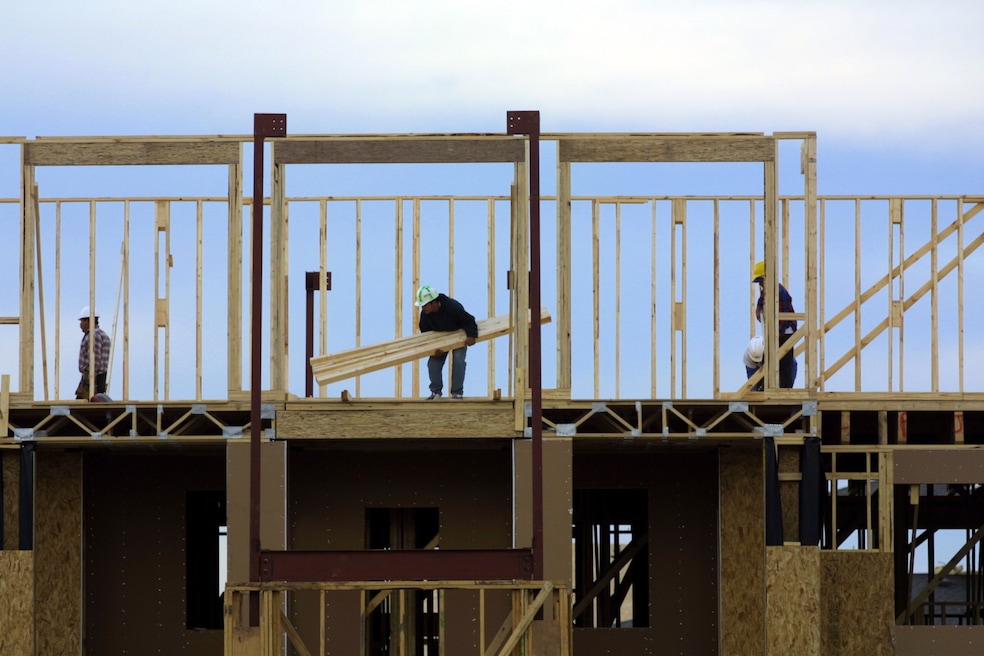
As immigration policy changes tighten an already thin pool of construction labor, more builders nationwide say they are sharing workers.
Three development professionals told Homes.com that the industry is relying increasingly on shared labor to meet deadlines, including two builders in Alabama and Illinois and a demolition contractor in New York.
Labor issues can come at a price for buyers. Some builders pass on the increased costs of paying more for talent, creating another price hike after the ripple effects of tariffs on materials. In addition, some finishes fall short of expectations due to the lack of consistency amid the constant change of talent handling the same job, they said.
"We are seeing an increase of companies who need labor and can’t find labor," said Marc Alleyne, CEO of Brooklyn, New York-based Spartan Demolition Co., which works on residential and commercial projects across New York City, Long Island, New Jersey, and Westchester County, New York. "It has to do with the immigration crackdown in America, where a lot of workers are either fearful to be out in the open or a lot of people are being sent back to their country of origin."
Many documented and undocumented workers have gone into hiding or abandoned sites for builders offering higher pay. Some builders noticed changes as early as January when raids began in public spaces and stores.
“That’s when it first started to get tough,” said Dwight Sandlin, CEO of Signature Homes in Birmingham, Alabama.
Contractors deal with 'influx of contracts'
Sandlin said he and his peers began leaning on one another to share talent to complete projects.
In 2024, Alleyne said, he received about two calls a year about sharing subcontractors. Now, he gets two a month.
"Right now, we have an influx of contracts,” Alleyne said. “It’s hard because you might find a worker and then someone might snatch him up.”
Hector Gonzalez, director of construction services for Neighborhood Housing Services of Chicago, sees similar activity in the Windy City. Labor plummeted there starting in August as immigration crackdowns and raids occurred on job sites.
“We have been forced to collaborate with other contractors in order to share remaining labor. That has led to higher prices in construction services. It has led to even some contractors going out of business and not being able to complete projects,” Gonzalez said.
Labor shortage exacerbates already tough market
In fall 2024, the National Association of Home Builders reported that the country needed to hire 723,000 new construction workers per year. As of last August, the country was losing 4,783 residential construction jobs a month. Meanwhile, wages for non-supervisors rose 9.2% in July, "reflecting the ongoing craftsmen shortage and strong remodeling demand," the NAHB reported in October.
And if a worker leaves one day and another one steps in halfway through the job, the work may look slightly off, Gonzalez said.
"They [buyers] are now more selective, more careful, and they are hiring more home inspectors to represent them in the homebuying world, and so the quality of the end product is really important," he said. "The cost of real estate is going up, and the quality of the product isn’t. The buyer then is left with buying a substandard product if they don’t do their research or they don’t hire the right professional to assist in the whole process."
Some builders are hoping for policy changes, which Sandlin said would benefit all stakeholders in the housing industry.
"What would make sense to me would be to address the problem as it is and give them visas and give them a way to pay taxes and address the issue," Sandlin said of the undocumented immigrants. "When you go to a city and start deporting everybody, everybody gets nervous and it clearly mitigates the number of workers you have. That will exacerbate precipitously the cost of housing."
Bipartisan policy proposals have come to the forefront in recent months. In July, Reps. María Elvira Salazar (R- Fla.) and Veronica Escobar (D-Texas) introduced the Dignity Act, a bill that would offer seven years of legal status to undocumented immigrants who pass a background check, pay taxes, and agree to pay a fee.